Golf Sim Chicago / Chicagoland
How Much Does a Golf Simulator Cost in Chicago? [2026 Guide]
The short answer: $8,000–$40,000+. Most builds are planned around $15,000–$40,000. Start with your room, then decide what equipment and finish level make sense.
These are planning ranges, not quotes. Your room and written scope determine the actual price.
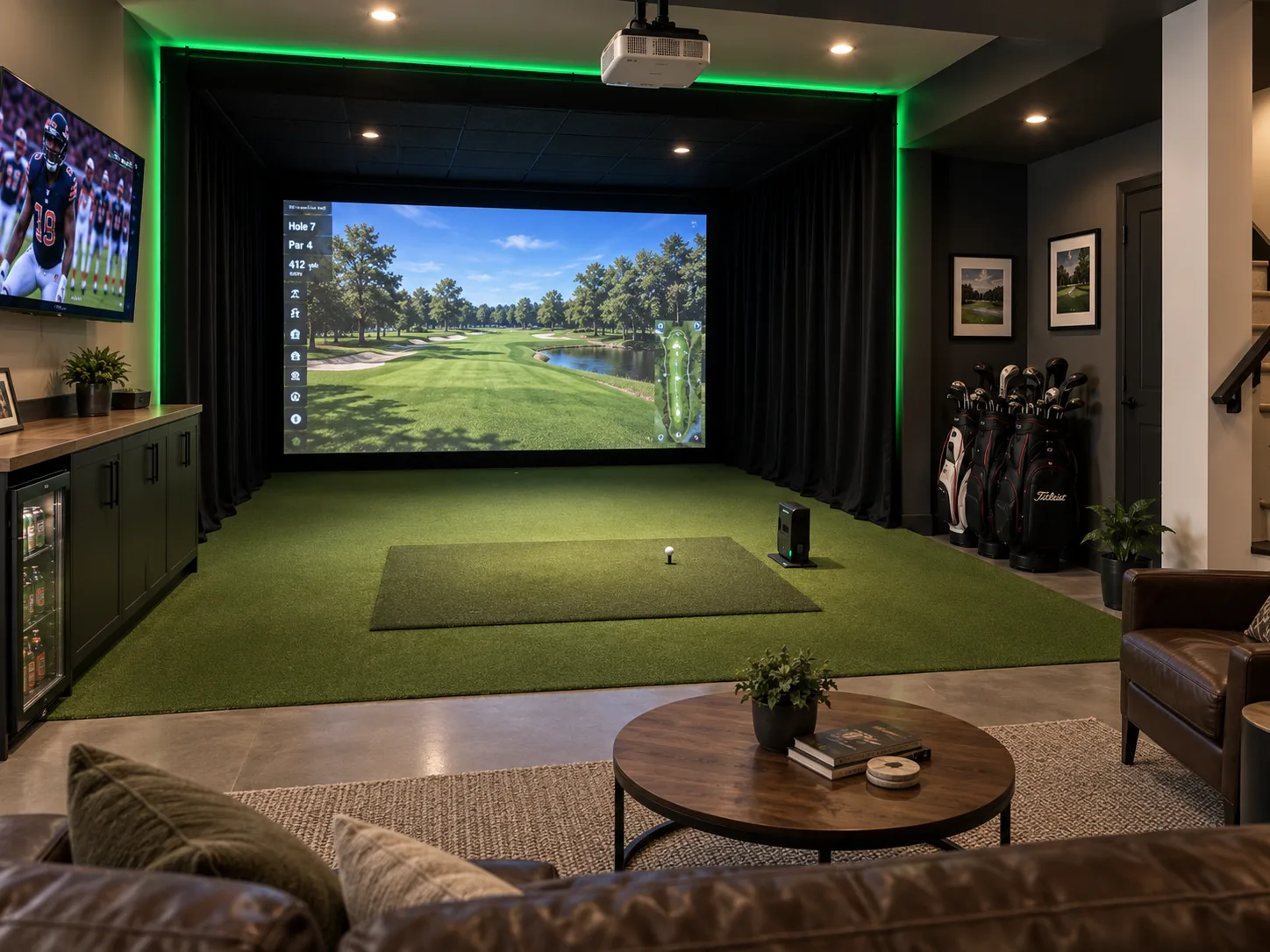
Find your starting point
These four levels are illustrative planning directions, not fixed packages. No equipment or installation scope is included until confirmed in a written quote.
Essential (~$8K, Illustrative starting point): The core setup, without a full room renovation. A practical starting direction for a room that is already suitable. Equipment and installation scope depend on the room. Possible elements: Launch monitor suited to the space; Impact screen and enclosure; Hitting surface; Projector and basic image setup; Compatible software; Room-specific installation scope to be quoted.
Performance (~$15K, Illustrative planning level): More room to choose the right parts. A step up in equipment and finish choices. The actual mix depends on available clearance, intended use, and what is already in the room. Possible elements: Launch monitor selected for the golfers and layout; Room-fitted screen and enclosure; Improved hitting surface and surrounding turf; Projector and compatible computer as needed; Software selection; Lighting and finish allowance to be scoped.
Tour (~$25K, Illustrative planning level): A more complete room, not just more equipment. More of the budget can go toward premium tracking, screen geometry, lighting, and room finish. No specific products or work are included until quoted. Possible elements: Higher-tier launch monitor allowance; Custom-fit enclosure and impact screen; Integrated hitting surface and turf; Projector, computer, and software allowance; Lighting and acoustic considerations; More extensive room finishes, if feasible.
Signature ($40K+, Custom scope only): Designed around the constraints and ambition of your space. For substantial room work or integrated finishes. The cost cannot be set responsibly without seeing the space and defining the scope. Possible elements: Equipment selected around a bespoke layout; Custom enclosure and screen integration; Purpose-built hitting area; Projector, computing, and AV planning; Finish, lighting, and acoustic design considerations; Trade work and installation scoped separately as required.
Where the money goes
A simulator is a coordinated system, not a single product. The amounts below are planning ranges, not quotes or verified current prices.
Launch monitor (planning range $500–$15,000+): The largest equipment variable. Choose around the hitting position, available depth, right- and left-handed use, and the data you actually want.
Impact screen + enclosure (planning range $1,500–$6,000): Screen size, ball containment, mounting conditions, and how the enclosure fits the room all affect cost.
Hitting surface (planning range $300–$2,000): Mat feel, strike area, durability, and whether surrounding turf is integrated into the floor matter more than appearance alone.
Projector (planning range $900–$3,000): Throw distance, mounting position, room light, and screen dimensions determine which projector makes sense.
PC (planning range $1,000–$2,500): Some software and visual settings need a capable computer. Check platform requirements before buying one.
Software (planning range $0–$1,000/year): Licensing varies by platform, feature, and course library. Confirm current terms and monitor compatibility before ordering.
Room finishes (planning range $1,000–$10,000+): Lighting, electrical work, floor treatment, paint, sound control, trim, and furniture can change the total substantially.
Chicago-specific costs and room factors
Ceiling and swing clearance: The lowest point matters, not the nominal ceiling height. Measure around ducts and beams, then test a full swing with every intended golfer and club before buying equipment.
Basement conditions: Columns, moisture, low clearances, and the path for carrying materials downstairs can all change the design and labor scope.
Width and depth: Usable dimensions determine screen size, hitting position, ball flight clearance, and whether both right- and left-handed players can use the room comfortably.
Garage climate: If the space is a garage, insulation and a suitable heating plan may be important for winter use. Check the existing electrical setup too.
Building and permits: Electrical, structural, or finished-room work may trigger local requirements. Rules vary by municipality, building, and scope; confirm them before work begins.
DIY versus professional installation
DIY ($3,000–$8,000 equipment only): A straightforward room and comfort with assembly can make DIY the right choice. The equipment-only budget does not include your time, renovation, trade work, taxes, or unexpected changes. You select compatible components; You handle measurement, assembly, mounting, and troubleshooting; Specialized electrical or structural work still needs qualified help.
Professional ($8,000–$40,000+ overall planning range): A professional route is worth comparing when the room is tight, needs significant finishing, or has multiple systems to coordinate. Scope and exact cost still require a room-specific quote. Design decisions start with the room; Equipment and finish choices are coordinated; Defined installation scope is documented in a quote.
These are different scopes, not directly comparable quotes; both depend on the room and chosen equipment.
Financing and ongoing costs
Some homeowners consider financing from an outside lender. No rates, monthly payments, or financing availability are represented here. Compare terms and total borrowing costs independently.
Software: Some platforms have annual licensing or optional content. Verify current terms directly before choosing equipment.
Wear parts: Screens, nets, and hitting strips eventually wear out. Replacement timing depends on usage and care.
Electricity: A projector, computer, lighting, and climate control add to household energy use, especially in a conditioned garage.
Upkeep: Plan for cleaning, occasional adjustment, software updates, and any future component replacements.
Get an exact price for your room
Bring rough dimensions, a few photos, intended golfers, and your budget. These figures are planning ranges, not quotes; a room review and written scope determine the actual price.
Frequently asked questions
What is a realistic starting budget for a home simulator?
As a planning direction, think about $8,000 for an Essential professional build and $15,000–$40,000 for more involved rooms. These are not offers or quotes. A room review and written scope are needed to establish your price.
What is the cheapest way to build one?
Doing the assembly yourself can reduce labor cost. An equipment-only planning range is $3,000–$8,000, not a quote; it excludes room work, tools, taxes, and specialist trades. The right components still depend on your space.
How much space do I need?
There is no universal dimension that guarantees a safe fit. Usable width, depth, ceiling height, obstacles, the longest club, and the chosen monitor all matter. Measure the lowest clearance and test full swings before ordering.
Will a basement cost more than a spare room?
It can. Beams, low ceilings, columns, moisture, electrical access, and carrying materials downstairs can add complexity. A dry, open basement may be simpler than a room that needs major changes.
Do I need a permit in Chicago or the suburbs?
Not automatically. Requirements depend on your municipality, building, and whether the project includes electrical, structural, or other regulated work. Check with your local building department and qualified trades before starting.
Can right- and left-handed golfers share one simulator?
Often, yes, but it changes the hitting position and may affect the launch monitor and room width needed. Bring this up at the start of planning.
Does a simulator add to home resale value?
It may appeal to some buyers, but there is no reliable resale increase to assume. Make the investment for how you plan to use the room, not a promised appraisal result.
Are financing terms available?
Financing may be possible through a homeowner’s own lender or other third party, but no rate, repayment amount, or availability is represented here. Compare total borrowing cost and terms independently before deciding.
Plan your golf simulator project
Share your room, goals, and questions with Golf Sim Chicago.